


The Dupatta Diaries: Styling Aura Benaras Banarasi Dupattas for Every Occasion

There's a reason a Banarasi dupatta never really goes out of fashion. Long after a particular cut of kurta or a trending colour palette has faded, a well-woven Banarasi piece is still sitting at the back of the wardrobe, ready to be pulled out and draped in a dozen new ways. It's not just fabric; it's history, patience, and the hands of Varanasi's weavers, folded into something you can wear on a Tuesday afternoon or a wedding night.
At Aura Benaras, that heritage liveliness is the whole vision. Every Banarasi dupatta in the collection is handcrafted by artisans who've spent years, sometimes generations, perfecting the zari work, the jaal patterns, and the Mughal-inspired motifs that make Banarasi weaves so distinct. The result is a piece that feels equally at home over a plain cotton kurta and a bridal lehenga.
So if you've got an Aura Benaras Banarasi dupatta showcasing in your closet and you're not sure how to make the most of it, here are seven ways to style it for absolutely any occasion on your calendar. Get the dupattas from the Best Handloom Saree Store in Varanasi.
Why a Banarasi Dupatta Deserves a Permanent Spot in Your Wardrobe
Before we get into the styling, it's worth understanding why this particular textile earns its keep. Most heavily embellished pieces are one-occasion wonders; you wear them once, photograph them, and they go back into storage. A Banarasi dupatta doesn't work that way.
The fabric itself does all the hard work. With floral vines, paisleys, and subtle zari borders, the dupatta becomes the spotlight of the ensemble, allowing for a simpler kurta, jewellery and footwear. A growing trend: let the dupatta do the work and keep the other pieces simple.
This is what allows one Banarasi dupatta to be paired with cotton suits, silk kurtas, chikankari sets, linen co-ords, anarkalis, lehengas, sarees and even Indo-western outfits: one piece, countless occasions.
1. Everyday elegance: Casual outings
One of the great things about a Banarasi dupatta is that you don't really need a special occasion on the calendar to wear one. It can easily be a lightweight, thin organza, georgette, or silk blend, and you will be good to go in completing your outfit in no time.
How to style it: Drape a vibrant Banarasi dupatta loosely around the neck, almost like a stole, over a white or pastel cotton kurta. Keep the rest minimal: oxidised silver earrings and juttis do the job. This is the kind of styling that works for a brunch, a college day, or just running errands and wanting to feel a little more finished. Imagine this: a sheer pastel-draped Banarasi dupatta over a clean white kurta, easy breezy chic, done.
2. Office chic with heritage charm
Formal ethnic wear doesn't have to be dull. By subtly draping a Banarasi dupatta, you can add personality to your office robe while still looking professional.

Good combinations include:
-
A beige kurta with a maroon Banarasi dupatta
-
A dark blue cotton outfit combined with a golden Banarasi dupatta
-
An ivory colored kurta with a light-colored Banarasi dupatta
Wear minimalistic accessories like small earrings, a simple watch, nude-colored heels, and a handbag with a structured silhouette. Drape the dupatta in a formal stole drape, as it looks more dressed updressed up for work.
3. Festive celebrations that shine.
This is the place where Banarasi weaving truly gets its name. Diwali, Navratri, Durga Puja, Raksha Bandhan, Karwa Chauth, Eid or a family puja- a Banarasi dupatta elevates any of them in seconds.
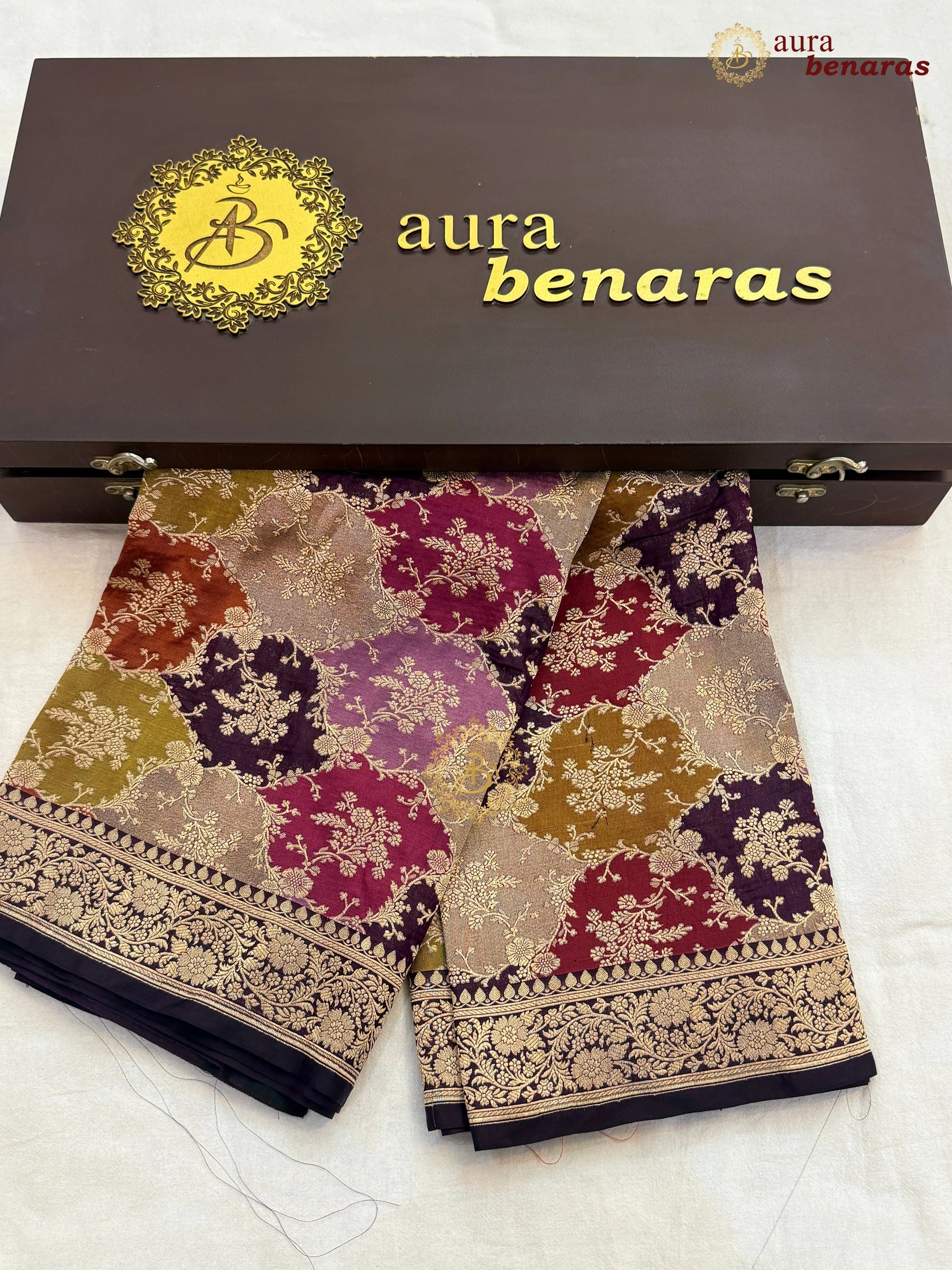
Stick to jewel tones for festival dressing: emerald green, royal blue, deep maroon, mustard gold or rani pink. Pair with plain silk anarkalis, chanderi suits, cotton-silk kurtas, or sharara sets, and keep the zari border visible as you let it drape over one shoulder. A multicoloured Banarasi silk dupatta is one of the most commonly used fabrics for festivals, for a very good reason – its sumptuous brocade and old-worldliness. Multi-toned dupatta over a plain anarkali, light getting a grip on the zari border – a classic-looking festival outfit.
4. Wedding guest glamour
When you receive an invitation to a wedding, you don’t always need to invest in a new outfit. You can convert what you already have into wedding-ready attire with an Aura Benaras Banarasi dupatta.
Here are a few combinations you can try:
-
An ivory suit with a red Banarasi dupatta
-
A black kurta with a gold Banarasi dupatta
-
A pastel lehenga with a juxtaposed Banarasi dupatta
-
A red silk saree with a Banarasi dupatta of the same colour.
Finish the look with chandbalis, statement bangles, a potli bag, and embellished juttis. The richness of the weave does most of the work, so the rest of the outfit can stay simple. A red saree paired with a gold Banarasi dupatta is understated on its own, but unmistakably festive once draped.
5. Bridal elegance with double-dupatta styling
Having a Banarasi dupatta with your bridal attire is an emerging trend, with brides opting for this addition. The elegance of draping a Banarasi dupatta over the lehenga is such that it would only elevate the bridal outfit, even if the dupatta is draped from the head, styled like a saree pallu, or layered with another dupatta made of velvet.
The elaborate zari work on the dupatta lends a richer look, and that is precisely what impresses modern brides with traditional designs.
6. Fusion fashion: Traditional meets contemporary
Handloom textiles are increasingly finding their way into western silhouettes, and Banarasi dupattas fit surprisingly well into fusion wardrobes.
Looks worth trying:
-
Pair a white shirt and jeans with a Banarasi dupatta as a scarf
-
Wear a simple jumpsuit with a Banarasi dupatta
-
Match a long jacket with a Banarasi dupatta
-
Combine a crop top with palazzos and finish the outfit with a Banarasi dupatta
Add a belt to acutely flatten your waist, if you wish to shape your silhouette. Celebrities have already opted for Banarasi textiles in the form of a jacket, a corset and even contemporary separates, showing that this thread has ample time to leave the ethnic sector.
A white shirt, jeans, and a Banarasi dupatta draped around the shoulder – Heritage weave and daily western wear.
7. Elegant Evening Parties
For cocktail nights, receptions and festive feasts, make Banarasi dupattas the show-stealer from the get-go. Mix and match it with monochrome suits, satin kurtas, floor-length anarkalis, or even a modern Indo-western gown, and complete the look with metallic high heels, glamorous earrings, and a sharp-angled hairstyle. A one-shoulder cascade vows to put all the focus on the fabric’s finish where it should be.
A one-shoulder drape over a floor-length Anarkali, combined with metallic high heels, works like a charm in a few minutes.
Choosing the Right Banarasi Fabric for the Occasion
Aura Benaras offers Banarasi dupattas across several fabric types, each suited to a different kind of occasion:
-
Pure Katan Silk dupattas for weddings, bridal functions and receptions
-
Organza Banarasi dupattas for daytime events, brunches and office wear
-
Georgette Banarasi dupattas for travel, long celebrations and comfortable festive wear
-
Tissue Banarasi dupattas for parties, evening events and contemporary styling
Each fabric drapes differently, which means building a small collection across these four types can cover almost every occasion you're likely to dress for in a year.
Trending Ways to Drape a Banarasi Dupatta
If you're looking to get more mileage out of a single dupatta, experiment with how you drape it:
-
One-shoulder drape for an elegant and timeless look
-
Front-fall style for balanced and graceful
-
Belted dupatta for modern and structured
-
Cape style for festive and dramatic
-
Shawl style is ideal for winters and formal settings
These five drapes alone can turn one dupatta into what feels like five different outfits.
Caring for Your Banarasi Dupatta
A handwoven piece like this deserves a little upkeep:
-
Dry clean whenever possible
-
Store it folded in soft muslin cloth
-
Keep it out of direct sunlight for long stretches
-
Avoid contact with perfumes and moisture
-
Refold occasionally to prevent permanent creases
-
Never hang heavy silk dupattas for extended periods
A little care goes a long way in keeping the zari bright and the fabric intact for years.
Why Aura Benaras?
An Aura Benaras 100% pure Banarasi dupatta isn't just another wardrobe addition; it's a piece of authentic Indian craftsmanship. They are a leading Manufacturer of Authentic Banarasi Sarees and Dupattas. Every single one of them represents a strong link to the culture of Banaras weaving, the work of generations of artisans, the splendour of silk textiles, and the craftsmanship involved in creating everything from fabric to designs that tell stories about Indian culture and history.
Whether it is a day at work, a festive occasion, or a wedding ceremony, Aura Benaras Banarasi dupattas can create looks for any occasion while staying true to their roots.
Conclusion
Trends may continue to change, but a gorgeous Banarasi dupatta will never go out of style. It is one piece that can be taken from a desk at work to a family puja to a friend's wedding without any changes.
If you'd like more styling inspiration, Aura Benaras regularly shares fresh ideas and behind-the-scenes weaving stories on the Aura Journal blog, and you can watch draping tutorials and styling reels on the Aura Benaras YouTube channel.
Because true style was never about chasing trends, it's about wearing tradition with confidence and letting seven centuries of Varanasi's craftsmanship speak for itself.