


The Cultural Symbolism of Banarasi Sarees in Indian Traditions
A Banarasi saree is never just an ordinary item of clothing. The moment you hold one in your hands, you can feel that there is something much more significant to it than just the silk and the metallic threads. It carries a long history in its weave, hidden meanings in its patterns, and deep emotion in the way it is bought, given as a gift, and kept safe for years. In Indian families, very few garments carry the same cultural weight as this specific type of saree. Understanding why this happens helps us see the garment for what it truly is. It is a living, breathing symbol of personal and national heritage.
This article looks at the different layers of meaning behind the Banarasi saree. We will look at its royal beginnings, its central place in family habits, its connection to religion, and the hidden messages stitched into its beautiful designs. Once you understand these layers, every single fold of a Banarasi saree starts to feel a little more special, turning a beautiful piece of fashion into a true celebration of cultural survival.
The Historical Roots and Royal Connections

The story of this beautiful fabric is closely tied to the history of India itself. It is a textile that has survived kings, empires, and modern changes. To really appreciate the saree you might wear to a family gathering today, we first need to look at the historical foundations that allowed this specific craft to become so highly respected.
The Beginnings of Weaving in Varanasi
Banarasi sarees come from Varanasi, which is also known to many as Banares or Kashi. This location is one of the oldest places in the entire world where people have lived continuously without interruption. For thousands of years, this city by the holy Ganges River has been a busy centre for art, trade, and incredibly skilled craft work. You can read more about the long history of the ancient city of Varanasi to understand just how old these traditions really are.
The environment of Varanasi played a very big role in growing this industry. The city sat on major trading routes, which made it easy for merchants to bring in fine raw silk. In the narrow lanes of the city, a community of weavers built a special system where weaving skills were taught closely from parent to child. The rhythmic sound of wooden handlooms clicking back and forth became the normal background noise of the city. Today, we still see these exact same methods being used. We are proud to work directly with these generationally skilled artisan families in Varanasi to make sure this ancient knowledge is not lost to modern machines.
The Mixing of Persian and Indian Art
While weaving existed in Varanasi for a very long time, the specific look we recognise today as the classic Banarasi saree went through a massive change during the Mughal period. The Mughal kings loved the art, buildings, and clothing of Persia. Because they wanted to mix these foreign luxury styles with local Indian talent, the royal courts brought Persian master weavers to Varanasi to sit and work alongside the local Hindu craftsmen.
This coming together of two different cultures created something entirely new and beautiful. The local weavers started adding Persian design ideas into their work. They used complex climbing flower vines, geometric shapes, and a very difficult brocade weaving technique. Brocade is a way of weaving where extra threads are added to create a raised pattern that looks like it is resting on top of the silk. This historical mixing of two distinct artistic worlds is the main reason why these sarees look so visually complicated today. It is quite literally a piece of fabric that shows two cultures shaking hands.
Why the Royal Courts Loved Pure Zari
There is a very clear reason why Banarasi sarees are always described as looking royal. Historically, these sarees were only worn by members of royal families, very wealthy merchants, and temple statues. The cost of making them was so incredibly high that ordinary people simply could not buy them. This made the garment an absolute sign of high social status and wealth.
The main reason they were so expensive was the use of real precious metals. Traditional weavers used genuine zari thread, which was made by melting down pure gold and silver. This metal was pulled through tiny holes to make a wire as thin as a human hair, and then it was carefully wrapped around a piece of strong silk thread. A single saree with heavy gold patterns could take an entire family of weavers several months to finish. Because the process took so long and used such expensive materials, many weaving families worked only for the palaces. They made special designs that no one else was allowed to wear.
The Deep Spiritual Meanings and Natural Patterns
Beyond the history of kings and queens, the Banarasi saree has a much quieter, more spiritual side. In Indian society, clothing is often used to show respect during religious events. Because these sarees come from such a holy place, they are treated with a very high level of respect by the people who wear them.
The Sacred Nature of the City Itself
Because the city of Varanasi is universally seen as the spiritual heart of India, it makes complete sense that the clothes made there carry a spiritual feeling. The city is deeply connected to ancient prayers, temple rituals, and the cycle of life. This spiritual atmosphere naturally finds its way into the daily work of the weavers. Many of these craftsmen view their work at the loom not just as a normal job, but as a form of daily prayer and devotion.
When a family buys one of these sarees for a religious ceremony, they are not just buying a pretty piece of cloth. They believe the fabric itself is clean, pure, and brings good luck. This is why you will often see these exact silks used to drape statues of gods and goddesses in temples across the country. The fabric is thought to carry the good energy of the holy city directly into the home of the person who buys it.
Understanding the Floral and Animal Shapes
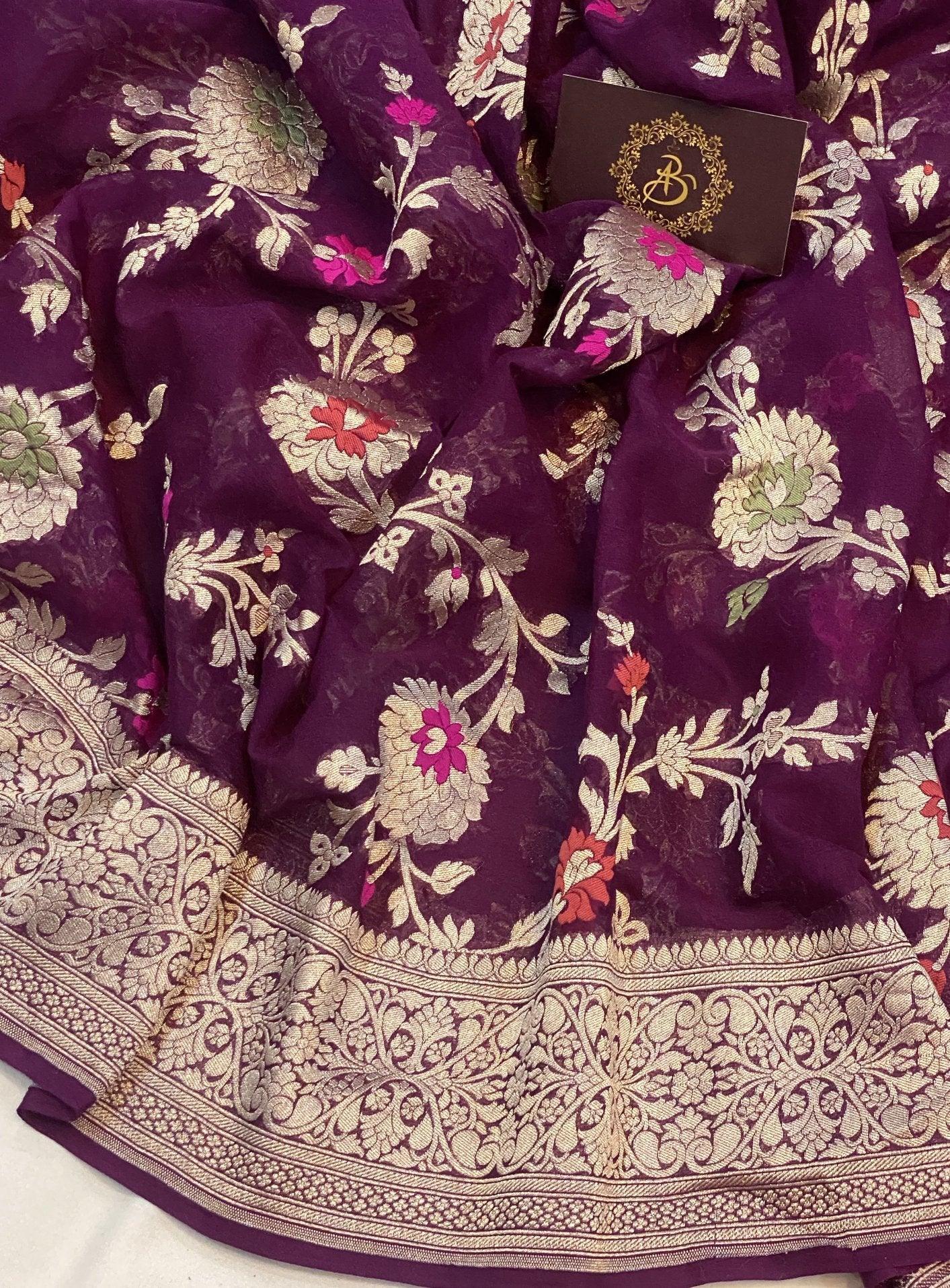
If you look very closely at the surface of a Banarasi weave, you will quickly see that the patterns are never just random decorations. Every single flower, leaf, and bird woven into the silk belongs to a very old visual language. The master weavers use their looms to tell stories and weave silent blessings directly into the clothes.
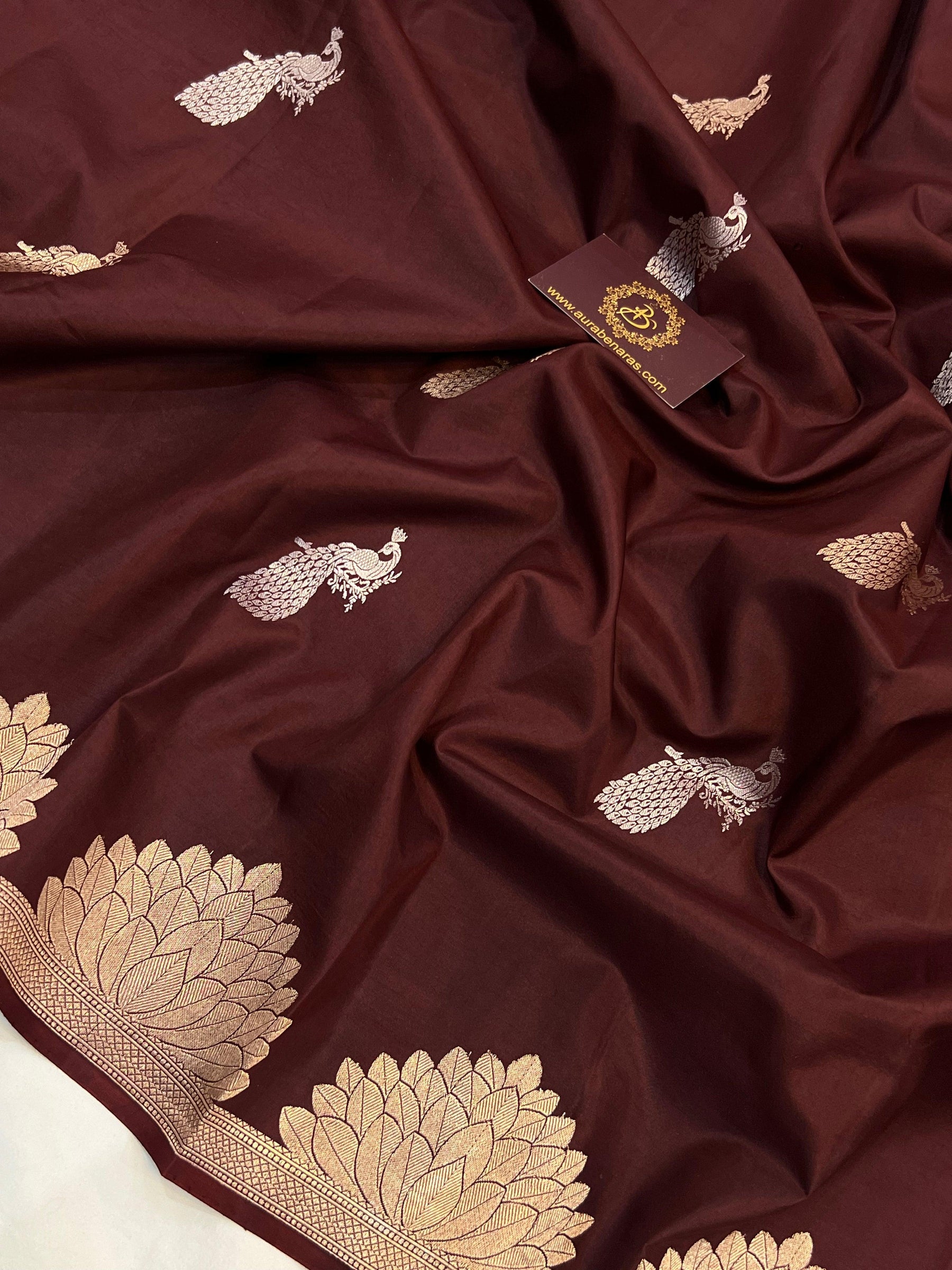
One of the most common shapes you will see is the mango shape, which is often called a paisley in English. In Indian culture, this curved shape stands for a good harvest, the arrival of new babies, and general good luck in life. You will also see many lotus flowers. The lotus is a very important spiritual symbol because it grows in muddy water, but the flower itself stays completely clean and beautiful above the surface. This represents a pure heart. You might also spot peacocks woven into the corners, which stand for beauty, grace, and the welcoming of the rainy season.
The Spiritual Importance of Temple Borders
The edges of the saree are just as important as the main body. The border of a traditional Banarasi saree often features a very specific geometric pattern that looks like a set of steps going up and down. This design is directly inspired by the tall, stepped roofs of ancient stone temples found across India.
These borders are not just there to make the edge look neat. In traditional thinking, the temple border acts as a protective wall. It creates a safe boundary around the person wearing the saree, keeping bad energy out and keeping good energy in. When a woman wraps the six yards of silk around herself, she is quite literally surrounding herself with symbols of safety and divine protection. It gives the wearer a feeling of being grounded and secure during important, crowded events.
A Fabric for Life Events and Passing Down Memories
As society moves forward into a very fast and modern way of living, we tend to throw things away quickly. We buy cheap clothes, wear them a few times, and replace them. The Banarasi saree stands completely against this habit. It is a garment designed to last a lifetime and is used to mark the most important days in a person's life.
Marking Special Milestones from Childhood to Marriage
In Indian traditions, human life is celebrated through a series of special milestones. The Banarasi saree acts as a beautiful marker for this journey, appearing at every major turning point to celebrate a person growing up and finding their place in the family.
A young girl might wear her first piece of simple Banarasi silk at a family festival, completely chosen and bought by her parents. As she grows into an adult and finishes her schooling, she might be given a slightly heavier saree to celebrate her new independence. All of this leads up to her wedding day, where she will wear a deeply heavy, brightly coloured Banarasi silk as a symbol of her new life and future prosperity. If you are currently planning a wedding wardrobe, looking into styling for haldi and mehendi can give you wonderful ideas on how to mix these traditional fabrics with fun, celebratory events. The clothes help map out the human journey, collecting happy memories with every single wear.
Keeping the Saree as a Family Heritage
One of the most touching things about these sarees is the tradition of passing them down from an older family member to a younger one. It is incredibly common to find an Indian home where a grandmother's wedding saree has been carefully folded inside a soft cotton cloth, perhaps with some dried neem leaves to keep the insects away, and kept safely in a wooden cupboard for thirty or forty years.
This happens because authentic, high-quality silk is incredibly strong. If you keep it away from damp walls and harsh sunlight, it will easily last for an entire century. Because of this, buying a heavy silk saree is seen as a long-term investment for the whole family. To protect this authenticity for future generations, the Indian government even gave the craft a special Geographical Indication status, which means it is illegal for anyone outside the region to make a fake one and call it a Banarasi. When a mother finally opens that cupboard to give the saree to her daughter, she is giving away a piece of family history. The fabric holds the scent of the past and the blessings of the women who came before.
Wearing Heritage in Modern, Everyday Life
A big problem with ancient clothing traditions is that they can sometimes become too difficult to wear in normal, modern life. For a very long time, the pure weight and thickness of heavy Banarasi silks meant they were locked away in cupboards for almost the entire year. People only brought them out for massive weddings or religious festivals. They simply were not practical for a normal Tuesday at the office or a quick lunch with friends.
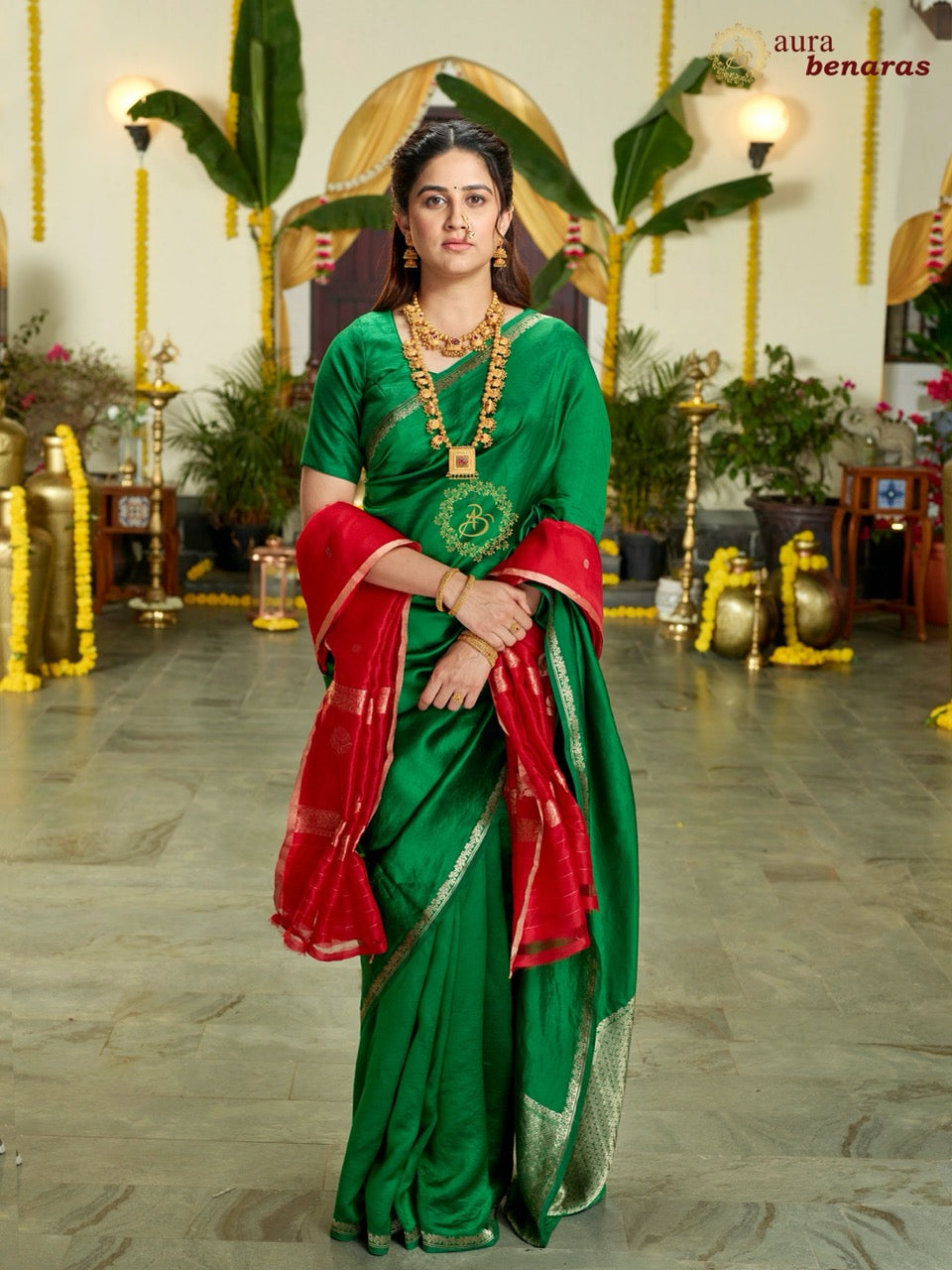
However, a very positive change is happening right now. Modern women want to feel connected to their culture without feeling uncomfortable or weighed down. We understand this need completely, which is why we created the Everyday Elegance collection. By working closely with our weavers, we have changed the weight of the fabric, reduced the heavy metal threads, and introduced incredibly light blends like cotton mixed with silk.
These modern versions allow the beautiful art of Varanasi to step out of the wedding halls and into normal daily life. You can now wear a piece of history to a work meeting, on the school run, or while travelling, without feeling restricted. By making the fabric lighter and easier to manage, we make sure that the cultural symbolism of the Banarasi saree does not become a forgotten museum piece. Instead, it remains a normal, beautiful part of everyday life.
Frequently Asked Questions
Why are Banarasi sarees historically linked to royalty?
In the past, these sarees were made exclusively for royal families, wealthy households, and temple statues because they were incredibly expensive to produce. Weavers used real gold and silver melted down into fine wires to create the patterns, and a single piece could take a family several months of hard manual work to finish. This high cost and incredible effort naturally turned the garment into a clear symbol of luxury and power.
What is the meaning behind common designs like the mango and the lotus?
The patterns on a Banarasi saree are never there just for decoration because they carry silent blessings and old stories. For example, the curved mango design represents a good harvest, future prosperity, and good fortune. The lotus flower is a spiritual symbol that stands for a pure heart and rising beautifully above life's difficulties.
Why are these sarees so often passed down as family heirlooms?
Genuine silk is a remarkably strong natural material. When kept away from damp cupboards and harsh sunlight, a high-quality Banarasi saree can easily last for over a century without losing its strength or its bright look. Because they last so long and are usually worn during highly emotional events like weddings, they become physical treasures that carry the memories and blessings of mothers and grandmothers.
Is it possible to wear a Banarasi saree for normal, everyday tasks?
Yes, it is entirely possible now. While traditional bridal pieces are often very heavy and stiff, modern versions are specifically designed for a daily routine. By using lighter fabric blends, such as fine cotton mixed with silk, and reducing the heavy metal threads, you can comfortably wear these pieces to work meetings or lunches while still keeping a beautiful connection to your heritage.