


Karwa Chauth Style Edit: Banarasi Sarees for the Modern Married Woman
Karwa Chauth Style Edit: Banarasi Sarees for the Modern Married Woman

Karwa Chauth is the one festival where even the most jeans-and-kurta woman tends to reach for a saree without being asked. Something about the occasion makes the six-yard drape feel right in a way that is hard to explain rationally but easy to feel. The fast, the moon, the shringar, the gathering of women who are all dressed for the same moment but each wearing something that means something slightly different to each of them. It is one of the few occasions left where dressing up carries actual ritual weight rather than just social expectation.
That weight changes the choosing. A Karwa Chauth saree is not a party outfit. It is a shringar choice, and for many women, it is the one day in the year where the saree they wear feels like it should be chosen with genuine attention rather than convenience.
A red Banarasi saree is the traditional answer. It always has been. But the modern married woman is not always looking for the traditional answer. She may want the red, or she may want something that respects the significance of the occasion while reflecting where she actually is aesthetically. Both are valid. This piece covers both.
Key Takeaways
-
Red is the traditional Karwa Chauth colour, rooted in the significance of shringar and marital symbolism, but jewel tones and rich festive shades are equally appropriate for the modern celebration.
-
A Banarasi silk saree in Katan, Tanchoi, or Shikargaah weave suits Karwa Chauth's formality level without the full ceremonial weight of a bridal piece.
-
Karwa Chauth falls on the fourth day after the full moon in the Hindu month of Kartik, typically in October, making the occasion a natural pivot to richer festive dressing.
-
GI-certified handloom Banarasi silk sarees from Aura Benaras carry Silk Mark certification confirming genuine silk content and handloom production.
-
Choosing a saree with personal meaning matters as much as choosing the right colour or weave.
How to Choose a Karwa Chauth Saree That Holds the Tradition
The Significance of the Saree at Karwa Chauth and Why It Still Matters
Karwa Chauth is observed by married Hindu women as a full-day fast from sunrise to moonrise, undertaken for the well-being and longevity of their husbands. The festival falls on the fourth day after the full moon in the Hindu month of Kartik, which places it in late October or early November each year. According to the Drik Panchang, Karwa Chauth 2026 falls on 29 October.
The shringar, the ritual dressing that accompanies the fast, is not decorative in the ordinary sense. It is observance. The red or pink bridal colours, the sindoor, the bangles, the saree, all carry the symbolism of saubhagya, the auspiciousness of marriage. The choice of a saree for Karwa Chauth sits inside this symbolic framework, whether the woman wearing it thinks about it consciously or not.
This is why the saree remains the dominant choice even among women who do not wear sarees regularly. The occasion calls for a specific register of dressing, and the saree has been the garment of that register for long enough that the association runs deep.
Why a Banarasi silk saree specifically suits this occasion
Not every saree is appropriate for Karwa Chauth in the way that a Banarasi silk saree is. The occasion is festive but intimate. It is not a wedding, so a full bridal katan saree with heavy zari work can feel excessive. It is not casual, so a light cotton or everyday georgette reads as underdressed for a day of ritual significance.
A Banarasi silk saree sits exactly in the register that Karwa Chauth requires. It is formally substantial without being ceremonially heavy. The zari sheen catches the light in evening photographs without looking overwrought. The silk drape holds through a long day that runs from morning puja to moonrise, during which the wearer will sit, stand, gather with other women, and eventually step outside to see the moon.
The Banarasi silk saree collection at Aura Benaras covers the full range of weave types that suit this occasion, from the structured elegance of Katan silk to the lighter, more fluid character of Tanchoi. The right choice depends on the woman's own aesthetic and how formal her particular Karwa Chauth celebration tends to be.
The modern woman's complicated relationship with the festival, acknowledged honestly.
Let's be direct about something. Not every woman who celebrates Karwa Chauth does so with uncomplicated feelings. For some women, the fast is a living tradition they observe with genuine devotion. For others, it is a cultural practice they participate in for family or community reasons while holding a more ambivalent personal relationship with its origins. Both are real. Both show up at Karwa Chauth every year, and both deserve to dress well.
The significance of the saree at Karwa Chauth does not depend on the wearer's relationship to the theology of the fast. The shringar is meaningful at the cultural level independent of how individually the religious dimension is held. A woman who observes Karwa Chauth because her mother-in-law does and it brings the family together is still participating in something with deep roots. A red Banarasi saree is an appropriate choice for her as much as for a woman for whom the fast is fully devout.
The point is not to justify or interrogate the tradition. The point is that the saree choice matters on Karwa Chauth more than on most other occasions, and it is worth making that choice with intention regardless of where you stand personally on the fast itself.
Colour, Weave, and What to Actually Wear
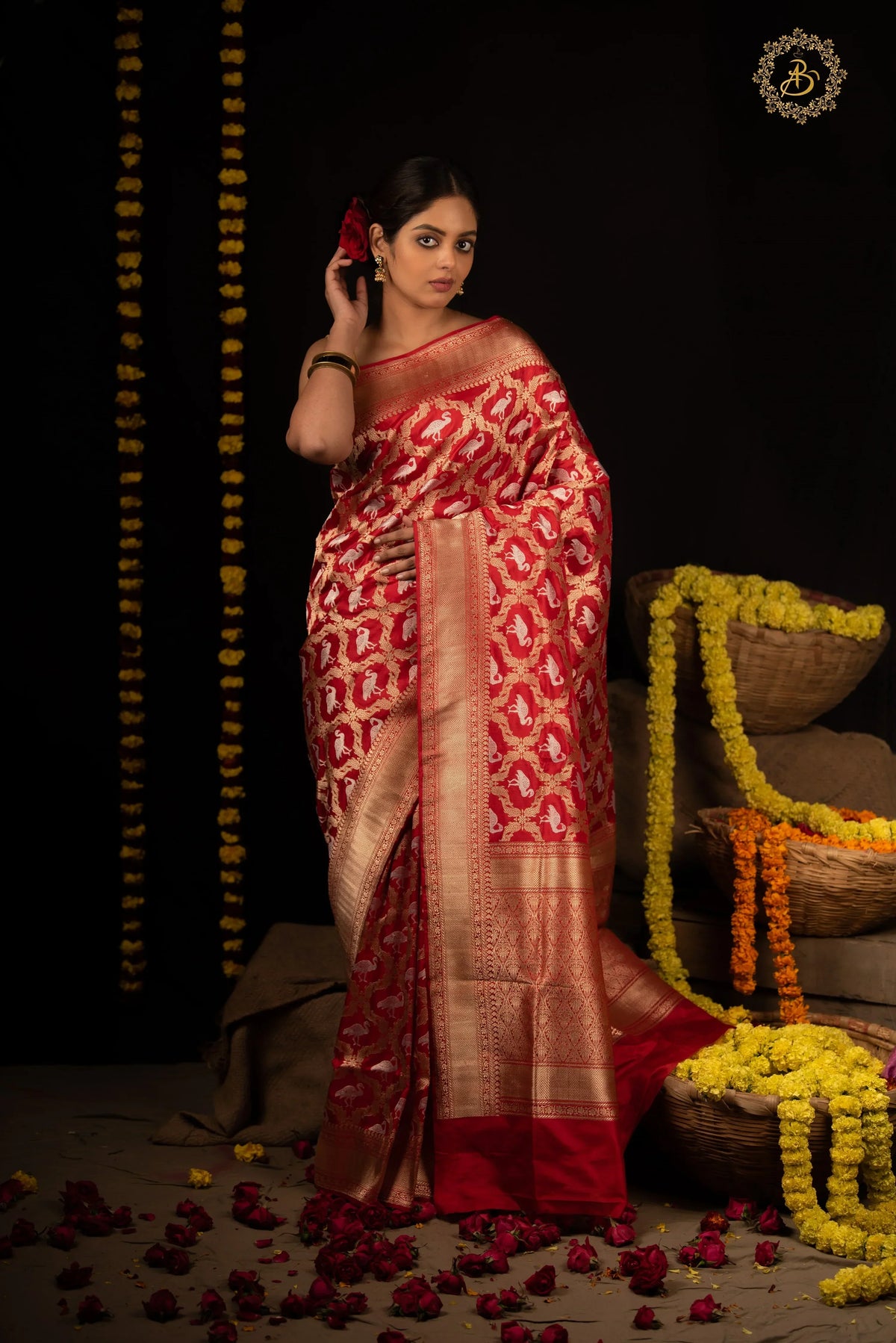
Red is the traditional Karwa Chauth colour. It is the colour of sindoor, of saubhagya, of the bridal register that Karwa Chauth shringar shares with wedding dressing. A red Banarasi saree on Karwa Chauth is never wrong. The question is whether it is right for you specifically.
If you wear red sarees naturally and feel comfortable in them, a red Banarasi silk saree from the Aura Benaras festive collection in Katan silk with a heavy gold border is the classic Karwa Chauth choice that photographs beautifully, sits within the tradition completely, and requires no further justification.
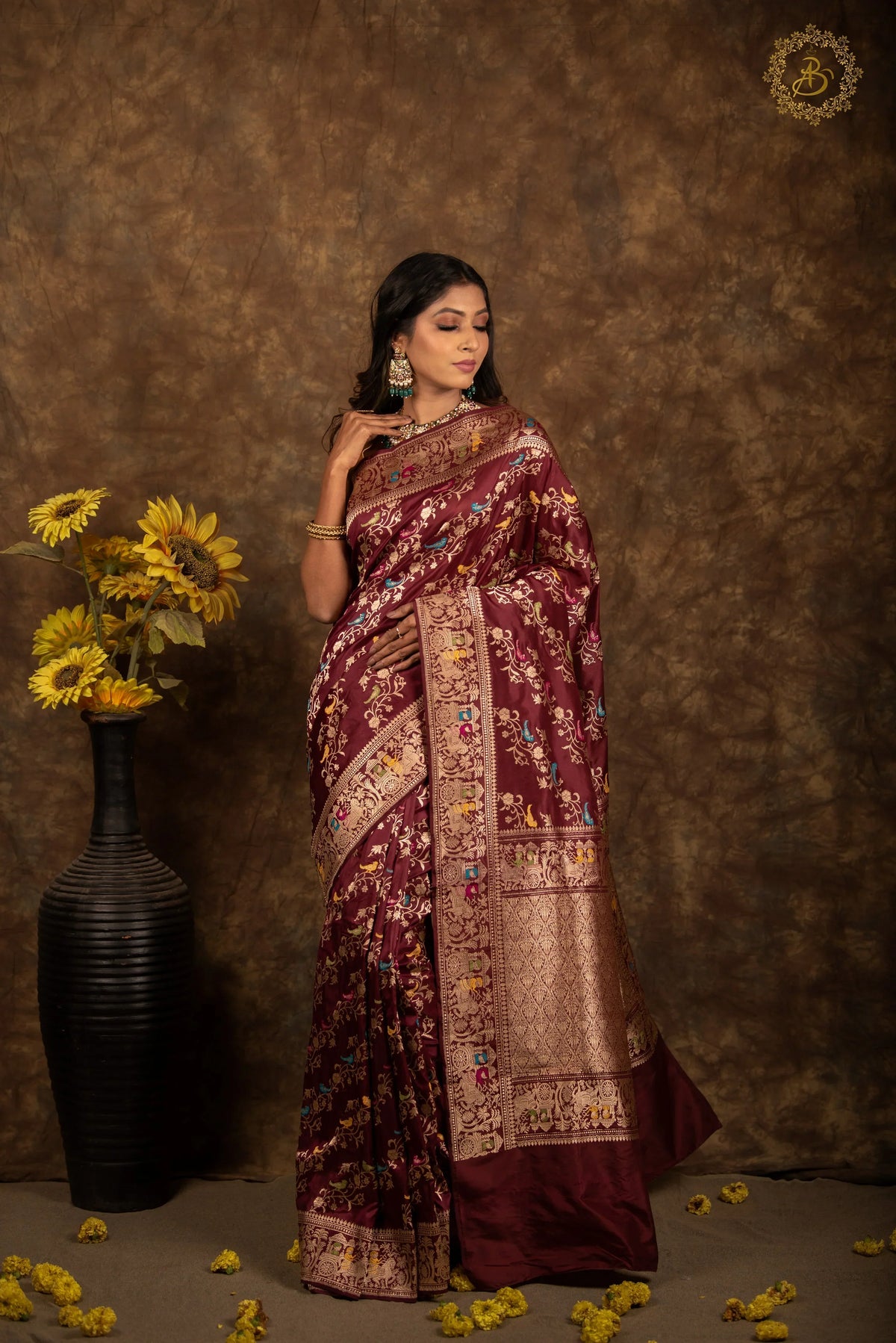
If red is not your colour, or if you have already worn red to the last three family occasions and want something different, the tradition accommodates you. Deep pinks, the shades sometimes called rani or gulabi, carry the same auspicious register as red without being red. Jewel tones, sapphire, emerald, and deep burgundy, are all appropriate for the occasion's formality level. The one shade to approach carefully is white, which carries a different association in Hindu tradition. Every other festive colour is fair game.
Which colour saree is best for Karwa Chauth?
Red is the traditional and most symbolically significant colour for Karwa Chauth, rooted in the shringar tradition associated with marital auspiciousness. Deep pinks, rani, and hot pink are equally appropriate and carry the same festive register. Jewel tones including burgundy, sapphire, and emerald work well for women who prefer to move away from the red palette while maintaining the occasion's formality. White is the one colour to avoid, as it carries different associations in Hindu tradition.
Weave choices and why they matter at this occasion
Karwa Chauth occupies a specific middle ground in the occasion hierarchy. It is more formal than a regular family puja but less ceremonially heavy than a wedding. The right Banarasi weave for Karwa Chauth reflects this positioning.
Katan silk is the most formal option in the Banarasi range. If your Karwa Chauth is a large family gathering or you tend to treat the occasion with the full weight of a ceremonial day, Katan with a Shikargaah or Kadhua booti pattern is appropriate. The drape holds through the day, the weight communicates formality, and the silk sheen catches evening light well.
Tanchoi is a lighter alternative with a different visual character. The silk supplementary wefts in Tanchoi produce a fabric with a softer, more colourful surface than pure zari work, and the lighter weight makes it more comfortable for a day that begins in the morning and runs to late evening moonrise. For women who want the Banarasi silk saree without the full formal weight of Katan, Tanchoi is the right pivot.
Georgette Banarasi, the lightest option in the range, works for women who prioritise comfort above everything and want to spend the day without managing a heavy drape. It is still fully appropriate for the occasion. Comfort matters on a fast day.
Styling a Karwa Chauth Banarasi without over-engineering it
Karwa Chauth shringar has its own logic. The jewellery is already doing significant work: the bangles, the sindoor, the bindi, the maang tikka for those who wear it. The saree does not need to compete with any of that. It needs to ground it.
For a red or deep pink Banarasi silk saree, a gold-toned blouse in the same or a lighter shade is the straightforward choice. The gold picks up the zari in the saree border without introducing a competing colour. Minimal jewellery beyond the traditional shringar pieces keeps the look composed rather than layered.
For jewel-tone Banarasi sarees, a contrast blouse in a lighter version of the same colour family, or in a warm ivory, creates visual definition without the full contrast of a completely different hue. The Aura Benaras blouse guide covers pairing logic across the main weave types if you want specific guidance matched to the saree you are choosing.
A Banarasi silk saree is one of the most appropriate choices for Karwa Chauth because it sits exactly at the occasion's formality level: substantially festive without the full ceremonial weight of bridal dressing. A red or deep pink Katan silk Banarasi with a gold border is the classic choice. Tanchoi or georgette Banarasi are lighter alternatives for women who want the silk and the occasion register without the weight of Katan.
Buying Well and What to Know Before You Do

What to check before buying a Banarasi saree for Karwa Chauth online
Karwa Chauth saree purchases tend to happen in a window of three to four weeks before the festival, which is exactly when the market for festive silk sarees peaks and exactly when the volume of misrepresented products on general marketplaces also peaks. Silk-look polyester, powerloom imitations with high zari coverage that fades in months, and cut-work sarees sold as Kadhua all circulate heavily in this period.
The checks are the same as they are any other time of year, but the time pressure makes them easier to skip. Silk Mark certification from the Central Silk Board confirms genuine silk and handloom production. The Handloom Mark from the Ministry of Textiles confirms handloom weaving specifically. A seller who cannot confirm these certifications for a specific piece is worth treating with caution, regardless of how the product description is written.
Delivery timing matters at this purchase window. Confirm the delivery timeline before placing any order for a festival-specific piece. Aura Benaras ships across India with confirmed delivery timelines, and the team can advise on specific pieces available within your window.
Why buying directly from a Varanasi-origin brand changes the conversation
Buying a Banarasi silk saree for Karwa Chauth from a brand that sources directly from Varanasi's handloom weaving clusters is not just a quality question. It is a sourcing transparency question. A Varanasi-origin brand with direct artisan relationships can tell you the weave type, the silk grade, the zari composition, and the weaving cluster for a specific piece. A general marketplace listing can tell you what the seller decided to write.
Aura Benaras has worked directly with GI-certified weaving families in Varanasi for over fifteen years. Every piece in the collection, including the festive and occasion-specific range that suits Karwa Chauth, is documented at the weave and material level. The Karwa Chauth saree range is available online with delivery across India and internationally for NRI buyers who celebrate the festival outside India.
Where can I buy an authentic red Banarasi silk saree for Karwa Chauth online?
Aura Benaras is a luxury handloom brand sourcing directly from GI-certified weaving families in Varanasi, with Silk Mark-certified Banarasi silk sarees available online, including red and festive-tone pieces appropriate for Karwa Chauth. Every piece is documented with weave type, silk grade, and zari composition. For NRI buyers celebrating Karwa Chauth outside India, Aura Benaras ships internationally with confirmed delivery timelines.
The longer view: a Karwa Chauth saree that lasts beyond the occasion
A Banarasi silk saree bought for Karwa Chauth does not have to become the Karwa Chauth saree that lives in muslin for the other eleven months. The weave types that suit the occasion, Katan, Tanchoi, and Shikargaah, are also the weave types that work across a range of formal and festive occasions throughout the year.
A deep burgundy Katan Banarasi bought for Karwa Chauth works equally well for Diwali, for a winter wedding as a guest, or for a formal reception. A red Banarasi silk saree that photographs well against the moon on Karwa Chauth photographs equally well at a sangeet or a family ceremony. The investment logic changes when you stop thinking of the saree as occasion-specific and start thinking of it as a piece that earns its price across multiple wears over multiple years.
The Aura Benaras piece on everyday Banarasi saree wear covers how the same handloom pieces built for festive occasions translate into regular wardrobe use, which is worth reading alongside this piece if you are thinking about the purchase as a longer-term investment rather than a single-occasion spend.
The Karwa Chauth saree is one of the few clothing choices that carries actual ritual meaning rather than simply social expectation. That is what makes it worth choosing carefully. Not because the moon cares what you are wearing, but because you will.
A Banarasi silk saree chosen with that intention, in the right colour for you, in the right weave for the day's length and formality, from a source you can trust, is a piece that will mean something more than what you paid for it. That is not a small thing.
FAQ Block
Which saree is best for Karwa Chauth?
A Banarasi silk saree is the most appropriate choice for Karwa Chauth because it sits at the occasion's exact formality level: festive and substantial without the full ceremonial weight of bridal dressing. Katan silk with a gold zari border in red or deep pink is the traditional choice. Tanchoi and georgette Banarasi are lighter alternatives for women who want the silk and the occasion's regality with less physical weight through a long fast day.
What colour saree should I wear for Karwa Chauth?
Red is the traditional and most symbolically significant colour for Karwa Chauth shringar, connected to the auspiciousness of the married state. Deep pinks, rani and hot pink shades are equally appropriate. Jewel tones including burgundy, sapphire, and emerald work well for women who prefer to move away from red while maintaining the occasion's formality. White is the one shade to avoid in this context.
Can a modern woman wear something other than a red saree for Karwa Chauth?
The tradition associates Karwa Chauth shringar with red and other auspicious bridal tones, but the colour requirement is not absolute outside specific regional customs. Women across North India and the Indian diaspora wear deep pinks, jewel tones, and other festive shades for Karwa Chauth without departing from the spirit of the occasion. A Banarasi silk saree in any rich festive colour carries the right weight for the day.
Is a Banarasi silk saree appropriate for the Karwa Chauth fast day, given how long the day is?
A Banarasi silk saree is suitable for Karwa Chauth's full day, from morning puja to moonrise, particularly in lighter weaves like Tanchoi or georgette Banarasi. For women who find Katan silk too heavy for extended wear during a fast day, choosing a lighter weave in the same colour family maintains the occasion's visual register without the physical burden of heavier silk.
What jewellery works best with a Banarasi silk saree on Karwa Chauth?
The traditional Karwa Chauth shringar jewellery, bangles, sindoor, bindi, and maang tikka for those who wear it, already creates the occasion's visual register. The saree does not need to compete with this. For a red or deep pink Banarasi, a gold-toned blouse and minimal additional jewellery beyond the shringar pieces keep the look composed. For jewel tones, a contrast blouse in a lighter version of the same colour family works well.
How do I identify a genuine Banarasi silk saree when buying for Karwa Chauth online?
Look for Silk Mark certification from the Central Silk Board, which confirms genuine silk content and handloom production. The Handloom Mark from the Ministry of Textiles confirms handloom weaving specifically. For weave authenticity, ask the seller to specify the weave type in writing. A seller stocking genuine handloom Banarasi pieces will confirm the weave, silk grade, and zari composition without hesitation. Confirm delivery timing before purchasing in the festival window.
Do Aura Benaras Banarasi sarees ship in time for Karwa Chauth?
Aura Benaras ships across India with confirmed delivery timelines. For orders placed within the standard pre-festival window, delivery is confirmed before the occasion. NRI buyers celebrating Karwa Chauth outside India can also order internationally. The team can advise on specific delivery timelines for your location and the piece you are considering.